
Green energy sector says Scottish Government can permanently end 13-year business rates battle by clarifying the law
Scottish Ministers are being urged to act quickly before dozens of small hydro schemes hit the wall, after a landmark court ruling which means that a thirteen-year business rates dispute will continue to threaten the industry’s future.
Trade bodies Alba Energy and the British Hydropower Association say the Upper Tribunal for Scotland has clarified the law – but exposed an ambiguity in the legislation that the Scottish Government can now resolve, without further legal appeal, mounting costs to the public purse, and more delay.
The sector is calling on ministers to make a minor amendment to secondary legislation which it says would restore fairness, protect jobs and investment and avoid years of further litigation over the “extraordinarily disproportionate rateable values of Small Hydro schemes” in Scotland.
The call follows a recent decision by Lord Young in the Upper Tribunal’s decision in Connell Renewables Ltd v Assessor for Highland & Western Isles, which dismissed the sector’s appeal but narrowed the dispute to what Alba Energy describes as a single point of technical definition, specific to the hydro-electric industry.
While grounds for appeal have been lodged, Alba Energy says ministers now have an opportunity to resolve the issue through secondary legislation, rather than prolonging a legal battle that has already lasted more than a decade.

Alexander Linklater, Executive Director of Alba Energy, said: “This judgment helpfully sets out the legal framework but is calamitous for Scotland’s small hydro sector. Many schemes that were designed to generate clean electricity for a century may not survive beyond the Feed-in Tariff period unless something changes.
“The Upper Tribunal has understood the legislation but misunderstood the function of a component of hydro engineering. The Scottish Government now has a chance to correct a technical definition and uphold the law. A modest amendment to the regulations would provide clarity to both the hydro sector and the Scottish Assessor, restoring fairness and avoiding years of further litigation.”
The sector says the need for action has become increasingly urgent. Since the 2017 revaluation, small hydro schemes have faced business rates far higher than comparable renewable technologies. Relief introduced by the Scottish Government has prevented many schemes from becoming uneconomic, but that support is temporary, does not benefit every operator and cannot provide the long-term certainty needed for investment.
Scotland is home to around 85% of the UK’s hydropower capacity, with more than 400 independently owned small hydro schemes generating clean electricity, supporting skilled employment and sustaining rural communities.
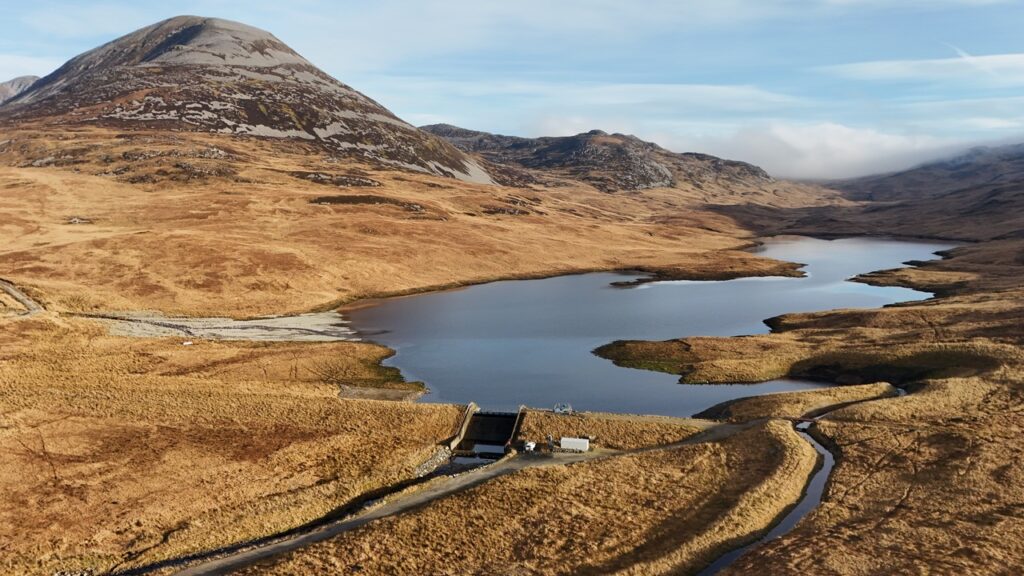
A briefing submitted to ministers highlights Inver Hydro on Jura as one of the most striking examples of the problem.
A 2MW scheme, designed and built by the Lithgow family, now has a 2026 rateable value of £829,500—higher than every other non-domestic property on Islay and Jura, more than double the next highest-rated property, and greater than every business on Jura combined. Despite no physical changes to the scheme, its annual business rates bill has risen from around £53,000 in 2016 to more than £450,000 today.
The disparity is illustrated by comparison with Cour Wind Farm, across the Sound of Jura, owned by Octopus Energy. Although it has an installed capacity of 20.5MW, more than ten times larger than Inver Hydro’s 2MW, its rateable value is £650,000, compared with £829,500 for Inver Hydro. On a per-megawatt basis, Inver Hydro is valued at more than 13 times the rate of the wind farm.

John Lithgow, owner of Inver Hydro, said: “It is challenging enough to build and operate a successful business in rural Scotland, let alone on an economically fragile island like Jura. Doing so while carrying an ever‑increasing business rates burden is simply unsustainable.
“We are willing to pay our fair share, but the current level is wholly disproportionate. Ministers now have an opportunity to resolve this once and for all — and must act before more hydro businesses are pushed to breaking point.”
The legal dispute centres on a single piece of hydro engineering known as the penstock—the pipe that creates the pressure necessary to generate electricity. The Upper Tribunal accepted that the penstock is specifically recognised in the regulations but also concluded that it becomes rateable under different provisions covering conveyancing pipelines and conduits.
Alba Energy believes that inconsistency results from an ambiguity in the legislation rather than Parliament’s original intention. The organisation says the misunderstanding could be eradicated through a simple amendment to the Valuation for Rating (Plant and Machinery) (Scotland) Regulations, or by a ministerial clarification of how the legislation is intended to operate.
Either approach, it says, would allow more than 250 outstanding appeals to be resolved without years of further legal proceedings, while costing the public purse very little because the sector has offered to forego most historic rebate claims.

Kate Gilmartin, Chief Executive of the British Hydropower Association, said: “This is about much more than business rates. It is about giving investors the confidence to back one of Scotland’s most dependable renewable energy technologies.
“The Upper Tribunal has set out where the legal ambiguity lies. We now urge Scottish Ministers to provide the certainty the sector needs through a modest amendment to the regulations. That would protect existing hydro schemes, encourage future investment and strengthen Scotland’s long-term energy security.”
Alba Energy and the BHA have invited Hannah Mary Goodlad, Minister for Public Finance, to visit Inver Hydro on Jura to see first-hand the impact of the current rating system and to swiftly resolve an urgent issue which would benefit Government, councils, businesses and rural communities alike.