
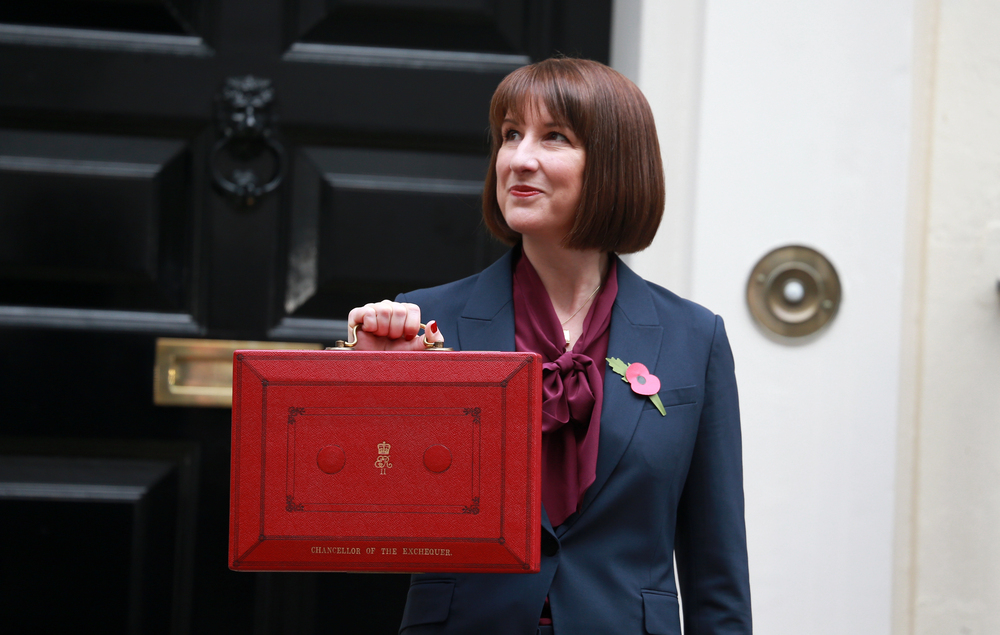
Chancellor Rachel Reeves delivered her second Budget today, announcing £26 billion in tax rises alongside measures aimed at tackling the cost of living crisis, prompting mixed reactions from business leaders, economists and politicians across the UK.
However the speech itself did not go without incident – with The Office for Budget Responsibility (OBR) accidentally publishing its economic and fiscal document before Chancellor Rachel Reeves’ had even delivered her Budget to the House of Commons. They said in a statement this was due to a technical error and were quick to apologise.
Key Budget Measures
The Chancellor announced that energy bills will fall by £150 a year on average, describing this as “direct action to tackle cost of living”. However, she acknowledged that the Budget asks “ordinary people to pay a little bit more” through a series of tax increases affecting households and businesses.
Central to the Budget is the extension of income tax threshold freezes until 2031, which will see many workers paying higher rates of tax as their pay increases. The measure is expected to raise £8 billion by 2029-30.
Other significant announcements include:
- Scrapping the two-child benefit cap from April, lifting an estimated 450,000 children out of poverty at a cost of £2.5 billion
- A new tax on homes worth more than £2 million
- Introduction of a pay-per-mile charge for electric vehicles
- Tax on pension contributions above £2,000
- Changes to ISA rules
- Minimum wage increases, with an 8.5% boost for 18-20 year olds
Political Response
Opposition leaders launched fierce criticism of the Budget measures. Conservative leader Kemi Badenoch called the Budget a “total humiliation” and accused Reeves of “hiking taxes to pay for welfare”.
Shadow Chancellor Mel Stride described the Budget as “a smorgasbord that’s turned out to be a bit of a dog’s breakfast”, warning that the impacts of “about 43 different tax increases” will be “borne by hardworking people up and down the country”. He called on Reeves to resign, saying her position is “untenable” because she has “clearly” broken her promise not to extend the income tax threshold freeze.
Liberal Democrat leader Ed Davey was equally critical, stating: “You can’t tax your way to growth.”
Economic Analysis
Helen Miller, Director of the Institute for Fiscal Studies, highlighted a technical breach of Labour’s manifesto commitments. “Freezing the thresholds on income tax and National Insurance means that more money will be raised,” Miller explained. She noted this would “break the letter of the manifesto which said no increase in National Insurance”.
The Resolution Foundation calculated that “the chancellor has now managed £68bn of tax rises in her first two budgets”, calling this “the biggest double whammy from a newly elected government since the £63bn of tax rises in 1993” under the Conservatives.
Business Community Concerns
Rain Newton-Smith, Director General of the Confederation of British Industry, issued a stark warning ahead of the Budget, cautioning against “death by a thousand taxes”. She challenged the government: “If you really believe in economic growth, prove it.”
Newton-Smith warned: “We risk getting locked in a stop-start economy where large tax rises rear their head every year. That is not the road to” sustainable growth.
The CBI acknowledged that the Chancellor “had difficult choices to make to deliver stability for the economy” but expressed concerns about the cumulative impact of tax increases on business investment and employment.
Chancellor’s Defence
In a post-Budget press conference held at a hospital, Reeves defended her decisions, stating: “I’m being open and honest – that from 2028 that is freezing thresholds a bit longer and that does have a cost. But we are putting money now in the pockets of working people.”
She emphasised that the government is “determined” to beat productivity forecasts and acknowledged: “I would have rather the circumstances were different, but I have to live in the world as it is.”
When pressed about breaking Labour’s manifesto pledge on National Insurance, Reeves refused to “get into semantics”, though she recognised she’s asking “ordinary people to pay a little bit more”. She defended keeping this contribution as low as possible by “closing loopholes and asking those with the broadest shoulders to pay more”.
Regional Reactions
Scotland
Scotland’s Finance Secretary Shona Robison argued that Scotland is an “afterthought” in the Budget, stating: “This Budget has been absolute chaos from start to finish. We needed a step change from the UK government with investment in public services, support for jobs and industry in Scotland and serious action on energy bills. Instead, we got a chaotic mess.”
Robison criticised the failure to abolish the Energy Profits Levy affecting oil and gas companies, many of which are major employers in Scotland. She noted that “the increase in funding for the Scottish government will not even cover half the cost of the employer’s national insurance contributions brought in this year”.
Wales
This evening, the Senedd supported a Welsh Conservative motion that said the UK Government is failing to deliver for the people of Wales.
Welsh Conservatives, Plaid Cymru, the Lib Dem and Independents all supported the motion. Labour voted against and the vote was won by 25 to 24 votes.
Welsh Conservative Shadow Cabinet Secretary for Finance, Sam Rowlands MS, said:
“Labour’s Autumn Budget announced today is a disaster for the people of Wales.
“Labour’s claim that they wouldn’t raise taxes on working people has been exposed for the second Budget in a row, Labour seem to relish spending other people’s money.
“Wales and the UK deserve better than a government that leaks its own Budget and punishes the very people who keep our economy running. With our Golden Economic Rule and £47bn savings plan, the Conservatives would control spending, back business and cut taxes to get Britain working again. Under Labour, we just keep paying more.
“Labour Ministers in Cardiff Bay must finally stand up for Wales instead of letting their Westminster colleagues raid people’s pockets. With even Scottish MPs getting a mention in the Budget, it’s clear Wales’ First Minister hasn’t lifted a finger for Wales.”
Richard Bond, Owner of Finest Retreats, said:
“The past few months of speculation have been paralysing. Property owners have postponed making investment and refurbishment decisions so we’re looking forward to being able to get back to business now the circus is over. The 2% increase in income tax for property owners is a disappointing break of the manifesto pledge and penalises those who have built up their pension savings in property. This may encourage more property owners to use limited companies, as the 25% corporation tax rate is lower than the new higher income tax rates.”
“Wales’ tourism industry already faces mounting pressure. The country has introduced a 150% council tax premium on second homes and will implement a £1.25 per night tourism levy from April 2027. Today’s Budget has added further costs that risk diverting money from local economies, from the high-value council tax surcharge (£2,500-£7,500 annually for properties over £2m from April 2028), extended income tax and National Insurance threshold freezes, and hA compounded existing pressures on holiday home owners. The cumulative effect risks reducing the money property owners can invest in maintenance and local services.”
Market Responses
Government borrowing costs fell after the Budget measures were confirmed. The yield on government borrowing over 10 years dropped to 4.41%, having initially spiked to 4.52% following an early leak of the Office for Budget Responsibility’s economic forecast.
BBC Economics correspondent Andy Verity explained: “Government funds aren’t like ours; they don’t tax people in order to stick it into a savings account. If you’re talking about whether they have enough, comfortably, you’ve got £26 billion of tax rises in this Budget. That’s more than enough to cover the £2.5bn it would cost to lift the two-child limit.”
Alex Davies, CEO of Wealth Cub, the largest broker of VCTs said:
“In the Budget the Chancellor announced that she would be reforming the UK’s venture capital schemes, allowing the Enterprise Investment Scheme (EIS) and Venture Capital Trusts (VCTs) to invest more money in more mature businesses. That was straight off the Venture Capital Trust Association wish list.
What the Chancellor failed to mention, but was hidden in the Budget documents, was that she would also be cutting the income tax relief available on VCTs from 30% to 20% from April 2026.
We’ve seen the effect of cutting income tax relief on VCT’s before. When VCT income tax relief was cut from 40% to 30% in 2006/07, funds raised by VCTs fell 65% year-on-year.
2026/27 will be no different – with smaller companies facing a drought in funding in the years ahead.
However, it also means that we expect this year to be a bumper one for VCT investment. Investors will likely pile in before the end of year deadline, and popular VCTs will fill up even faster than usual. It really will be a case of “buy now while stocks last.”
While it might not achieve the Chancellors goal of “incentivising funds to seek out higher returns, to ensure they are targeting the highest growth companies”, it will be a great case study in behavioural economics.”
Calum Cooper, Head of Pension Policy Innovation, Hymans Robertson says:
“The PPF providing better pre 1997 inflation protection for those that lost it is a great thing for savers. Kudos to the government for taking this on. As ever, how this is delivered in practice will take care. One positive unintended consequence is that it means the PPF’s coverage is now as near to 100% as it has ever been. As a result, Companies and Trustees may want to reflect on their appetite for creating and sharing value via running the DB schemes on, given that the downside risk is now reduced. On the other hand, thought and care will be needed to ensure that the superfund market can continue to thrive – it will make sense to think carefully about their capital thresholds and where that needs to be in light of this change. For example, done bluntly those that should benefit most from the PPF compensation change may miss out on full benefits by virtue of pushing the price of superfund out of reach – clearly an unintended consequence.”
Roan Lavery, CEO & co-founder of cloud accounting platform FreeAgent, said:
“Today’s Budget will feel like a mixed picture for small businesses. While they may think that they haven’t been hit as hard as last time – when changes to National Insurance contributions had a massive impact on the SME sector – there are still a few unpleasant surprises in the Chancellor’s speech.
“Measures such as a rise in the minimum wage, an extended freeze on National Insurance and income tax thresholds, rises to tax rates on assets and dividends, and changes to salary sacrifice pension contributions all point in the same direction: higher employment and tax costs over the next few years. Together, these moves will heighten the pressure on small businesses that are already doing their best to keep on top of their obligations. For small employers already operating on wafer‑thin margins, that makes careful cashflow management and forward planning more important than ever.
“Small businesses have shown remarkable staying power in what’s been a turbulent year. Our latest Business Monitor data shows that nearly half expect performance to hold steady over the next 12 months, and around a third are predicting growth, despite persistent challenges around cashflow, rising costs and late payments. But behind that resilience there’s real strain: almost half of the business owners we’ve surveyed cite maintaining healthy cashflow as their top concern, and 78% admit to working while ill because they don’t feel they can afford to take any time off from their business. This Budget will only contribute to those concerns.
“It’s not all negative. For example, funding to make training for under‑25 apprentices free for SMEs is a genuinely positive step. Removing that cost barrier will make it easier for small firms to bring in young talent, invest in skills and build the next generation of their workforce. There’s also some good news for AI businesses and those in specific regional areas, as well as the retail and hospitality sector – who will pay lower business rates on their premises compared to warehouses operated by larger multinational companies.
“However, UK business owners are still crying out for pragmatic policies that make day‑to‑day operations easier, including simplified tax rules to measures tackling late payments. There’s also a clear appetite for government‑backed access to finance and digital investment, which are essential to long‑term growth.
Nigel Holmes, Director of R&D at Ryan said:
“We welcome the government’s announcement of a targeted advance assurance service for R&D tax relief. This initiative could provide much-needed clarity for small and medium-sized businesses navigating complex R&D tax relief claims.
However, the success of this service will depend entirely on the quality of its implementation. It is crucial that HMRC staff are fully trained to understand R&D tax relief and its nuances. Without this foundation, even the best-intentioned service risks creating more confusion rather than the clarity businesses desperately need. It must not repeat the failings of the past.”
Timothy Douglas, Head of Policy and Campaigns, Propertymark, said:
Many property agents and consumers will be left scratching their heads that, after months of speculation and the expectation of large-scale changes to Stamp Duty, nothing has materialised. All this speculation and uncertainty caused people to wait and see, which is not helpful for market activity and economic growth.
A High Value Council Tax Surcharge will disproportionally hit homeowners in London and the South East, which is already the most troubled part of our property market, and it will distort property valuations across the country. Furthermore, placing further financial pressures on landlords through increasing additional rates of property income tax will simply increase rents, as costs are passed on to tenants. The Office of Budget Responsibility has said as much, noting in its impact statement that “this successive eroding of private landlord returns will likely reduce the supply of rental property over the longer run. This risks a steady long-term rise in rents if demand outstrips supply.”
Overall, with the UK Government’s ongoing target to build 1.5 million homes, and given their recent focus on home buying and selling, it is surprising that the UK Government’s Budget does not include a wide-ranging package of support for people to get onto or move up and down the property ladder. With an average deposit for first-time buyers currently sitting around £60,000, ultimately, this feels like a missed opportunity to support renters, home buyers and sellers and promote greater economic activity through the housing market.
Dr Neil Cobbold, Commercial Director at Reapit said:
“Today’s Budget will affect sales and lettings differently across the UK, but it will finally bring clarity after months of speculation that have hampered transactions. The ‘mansion tax’ on properties worth £2m or more will create a cliff-edge on valuations and potentially pause some high-end sales, particularly in London suburbs and the South East.
“The 2% increase in property income tax will dent landlord income and risk rental property attrition at a time when we need more supply. However, it also creates an opportunity for expert agents to advise on alternative strategies, such as higher-yield tenancy types including student rentals and HMOs, refinancing options to reduce mortgage payments, or even transitioning properties to sales.
“Beyond property taxes, lower energy prices will improve affordability for tenants and potential homeowners – a welcome boost in a challenging market. The funding allocated in this Budget to improving the planning system is another welcome step towards accelerating the delivery of the 1.5 million homes the government has committed to.
“Charging National Insurance on ‘salary sacrifice’ pension contributions above £2,000 from April 2029 could prompt some high earners to look for alternative investments. The best agents will be able to show that property remains an attractive option.
“Meanwhile, with large increases in the national minimum wage, agencies looking to hire for entry-level jobs may be forced to reconsider and instead focus on AI and technology designed to make existing teams more efficient.”
Law Firms Respond:
Tom Whittaker, director and head of AI at UK law firm Burges Salmon, says:
“Companies across the UK will welcome further news about government investment, regulatory reforms and policy development to support AI adoption and infrastructure.
“Companies and talent will welcome government’s measures to make the UK an AI maker, not taker.
“Government announcements on AI growth zones, infrastructure, talent and taxation policy, reflect that AI opportunities are across the UK and across sectors.
“Government announcements reflect a focus on the picks and shovels necessary to drive innovation – such as data centres, energy, and data – as much as on the AI technologies and tools themselves.
“Changes to public procurement reflect that AI is seen as both a global opportunity and a national security issue.”
Bina Gayadien, partner at law firm Spencer West LLP said:
“Today the Chancellor announced key measures impacting taxation of employment without raising the headline income tax or social security rates. The announcements include bringing salary scarified pension contributions over £2,000 within National Insurance Contributions for employers (15%) and employees (8% or 2%) and an annual levy on electric cars, another popular benefit. These changes combined with the increase of minimum wages and freezing of personal tax thresholds until 2030-31 tax year will ultimately result into higher costs to employers impacting future pay rises and bonuses. Employers have until April 2029 to prepare for these changes and consider how they structure compensation and benefit packages to remain competitive while managing rising costs.”
Healthcare professionals Respond:
Paul Schreier, Chief Executive Officer, Simplyhealth and Denplan said:
“We welcome the Chancellor’s Autumn Budget commitment to continue prioritising the health of our nation. The investment in digital capabilities to improve productivity within healthcare, alongside the rollout of neighbourhood health centres bringing GPs, nurses, dentists, and pharmacists together, represents an important step towards delivering more accessible and integrated care.
“The need for a prevention-first approach to healthcare is an important step change, as economic inactivity due to sickness is projected to exceed four million people by the end of this government and employees are taking 9.4 days absence per year on average. The recent Keep Britain Working Review rightly reinforces this approach and the vital role employers can play. Recommendations such as risk pooling for SMEs to improve access to health provision are pivotal to ensuring all employees have the support they need to stay in work. However, the cost of doing business continues to rise. While we welcome calls to remove disincentives, such as tax, from the system, any delay to the next spending review risks missing opportunities to embed prevention, setting us on the wrong path and adding to inactivity numbers. Resetting incentives now would boost economic contributions and help reverse the trend of rising sickness-related inactivity.
“In dentistry, the funding committed to community health hubs is a positive step, as these centres can integrate dental care into local provision and improve patient access. But this progress will not be sustainable without urgent clarity on the NHS dental contract. Reform is essential to incentivise prevention and make NHS and mixed-practice dentistry viable up and down the country. Proposed changes, such as new care pathways for complex needs, mandatory urgent care provision, and fairer remuneration, must be implemented swiftly to ensure dentistry plays its full role in reducing health inequalities and supporting oral health as part of wider prevention strategies.”
“The Autumn Budget should have been the time to address pensioner poverty, but the UK Government has missed an opportunity to tackle an issue that affects almost two million older people.
Nadine Hachach-Haram, CEO of leading UK healthtech company Proximie said:
“The Budget underlines a simple truth that the NHS has to deliver more care, faster than ever, with a workforce under real strain.
“The fastest route to this isn’t asking teams to work harder. It’s removing the friction we’ve normalised in the Operating Room (OR) by embedding real-time intelligence into everyday workflows.
“The OBR’s view that AI may deliver only modest productivity gains in the near term reinforces what really matters now. Stretched healthcare teams need practical, easily integrated technology that pays back quickly and ultimately helps to reduce admin, improves surgical workflows, and helps teams run safer, smoother lists.
“The NHS doesn’t need more pilots now. It really needs solutions that integrate, scale, and provide value from day one, with OR visibility and orchestration that helps decisions happen earlier, and prevents delays becoming cancellations.”
Looking Ahead
The Budget sets the fiscal framework for the remainder of this Parliament, with Reeves maintaining that her measures are necessary to “get borrowing down while supporting investment”. The Chancellor has committed to her fiscal rules requiring that day-to-day spending must be covered by tax receipts by 2029-30, and that government debt should be falling compared to the size of the economy by that period.
As businesses and households digest the implications of these changes, the coming months will test whether the Chancellor’s gamble on tax rises to fund public services and investment can deliver the economic growth the government has promised.
More debate will ensue in the coming days, however one thing is here, this is very much a ‘marmite’ budget, with many relieved the cuts and tax rises did not go further.
Sources:
- BBC News live coverage, 26 November 2025
- BBC News: Budget 2025: Key points at a glance
- Institute for Fiscal Studies analysis
- Confederation of British Industry statements
- House of Commons proceedings