
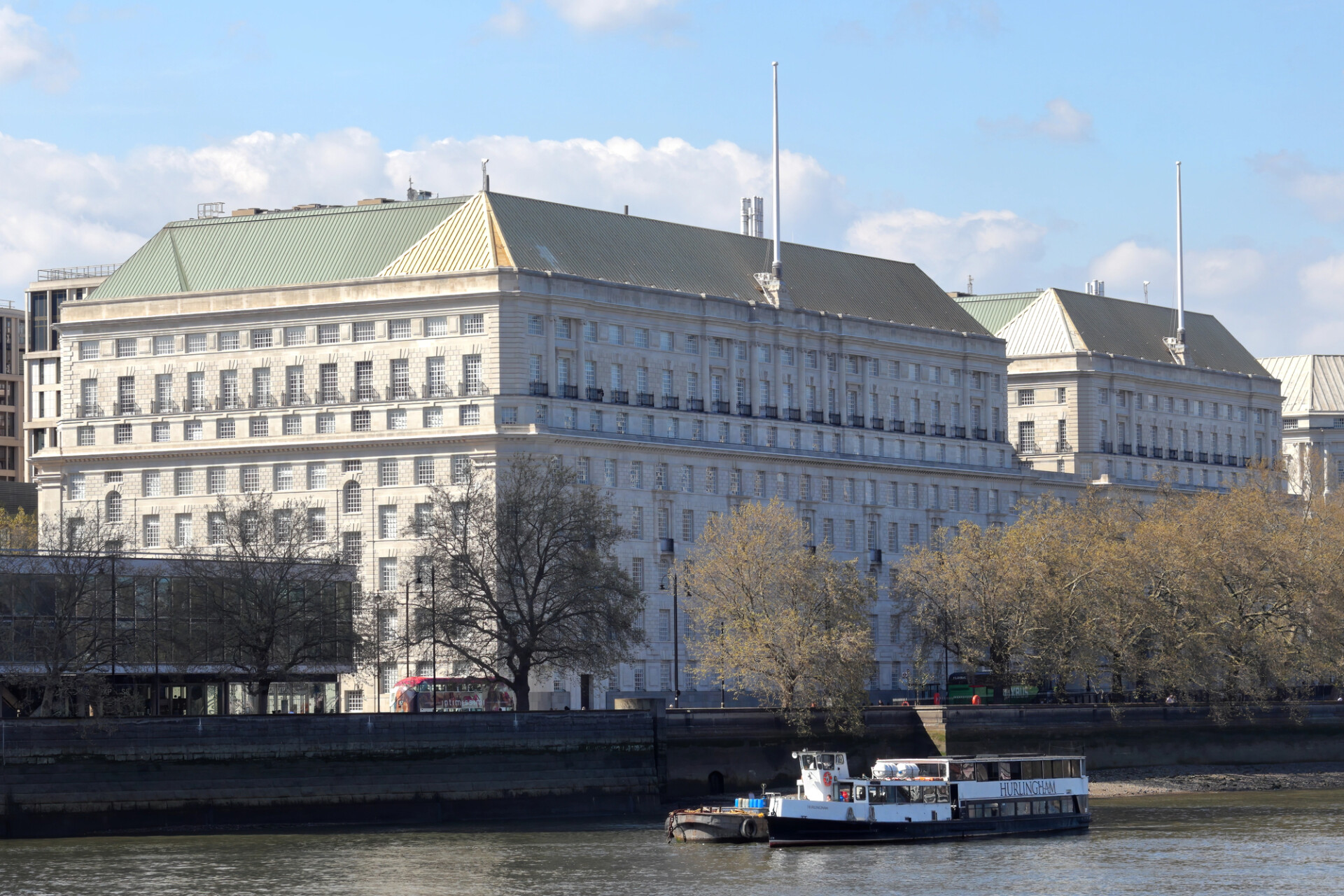
Britain has entered a new era of national security in which businesses, infrastructure and communities are increasingly being targeted by hostile states and terrorists, MI5 Director General Sir Ken McCallum has warned.
Delivering his annual threat update at Thames House on 13 October, McCallum said MI5’s state threats caseload had quadrupled over the past decade. The agency now devotes more resources to countering those threats than it did during the Cold War, while its counter-terrorism responsibilities remain substantial.
His message extended beyond government and intelligence agencies. Financial systems, energy grids, supply chains and manufacturers are vulnerable to disruption, he warned, with attacks capable of affecting banking access, transport and hospital treatment.
Businesses Urged to Prepare for Disruption
McCallum announced that MI5 had elevated its protective work into a third core mission, called “Protect”, alongside countering terrorism and state threats.
The aim is to strengthen national resilience: making the UK harder to attack and helping essential services continue operating when incidents occur.
“Our interconnected financial systems, energy grids, supply chains and manufacturing bases, designed during simpler times for maximum efficiency, are vulnerable to malicious disruption and coercion,” he said.
He urged organisations operating critical infrastructure and defence suppliers of all sizes to implement security guidance before an incident. Technology start-ups were told to anticipate foreign espionage and strengthen their cybersecurity, while universities were encouraged to safeguard valuable research.
AI Threat Assessment Centre Launched
Artificial intelligence featured prominently in the update, with McCallum warning that it is already intensifying competition between cyber attackers and defenders.
He said terrorists had been caught seeking to use AI to improve reconnaissance and attack methods. The technology can also generate propaganda tailored to individuals.
Looking ahead, he identified AI’s potential to alter the risks associated with existing or new biological weapons as a particular concern, while making clear that this misuse scenario had not yet been realised.
McCallum announced the launch of the AI Threat Assessment Centre, housed within MI5 and drawing on expertise from organisations including the AI Security Institute, National Crime Agency and National Cyber Security Centre. Its role is to provide assessments that distinguish emerging dangers from exaggerated claims.
Russia and Iran Expand Hostile Campaigns
McCallum described Russia as the leading state aggressor and accused its military and intelligence services of escalating tactics that fall short of conventional conflict.
He also said Iran-linked operations had resulted in more than 50 arrests in the UK over the previous twelve months. Alongside threats against opposition figures, media organisations and Jewish communities, he identified increased Iranian ambitions to target military sites.
On China, he highlighted espionage, coercion and democratic interference, including attempts to obtain valuable research. However, he said the UK could continue pursuing partnerships with Chinese organisations where these served the national interest, provided risks were understood and managed proportionately.
Extremist Violence and Online Radicalisation
The update also warned of an increase in cases where extreme anti-immigration and anti-Muslim grievances were developing into terrorist intent.
McCallum said extreme right-wing terrorism continued to involve young people radicalised online, while Al Qaida and Islamic State remained capable of directing and inspiring attacks.
He concluded with an appeal for preparedness across society, including businesses, parents, researchers and news consumers.
“My message to the British public is this: you have a stake in our national resilience. You too have a vital role to play,” he said.
Sir Ken McCallum’s Full Annual Threat Update
Delivered on 13 October 2026. Text as published by MI5. MI5 – The Security Service
“Good morning, and thank you for joining me at Thames House for my annual threat update.
This month marks exactly thirty years since I joined MI5 and took up my first role, on Northern Ireland Terrorism.
Five years into my career, 9/11 struck, ending almost 3000 lives and devastating many more. A seismic shock that changed the world – and changed MI5 demanding radical transformation as we took on a radically different form of threat.
We’re there again.
Since I started in this role in 2020, there has been another generational shift. We have again entered a new era of national security – requiring a new response.
Sometimes national security can be talked about like a remote geopolitical contest, something best left to a handful of specialist government agencies, far from the concerns of everyday life.
But the impacts of the threats we face at scale in 2026 – arson, sabotage, cyber-attacks, coercion, violence – are deeply human. Much of the time, those who mean the UK harm aren’t attacking things government owns or controls. They’re aiming at people, businesses, communities. At the cohesion of our society.
So today I want to talk directly to the British public.
When you hear ‘national security’, don’t just think of Ukraine, subsea cables, armed drones or cyber weapons. Think also of the place where you live, where you work. Think of a flicker in the power grid supplying your home. Think of your local synagogue or mosque having to install enhanced security. Think of a toxic or manipulative post on social media. Think, perhaps, of what online algorithms are feeding your teenagers in their bedrooms.
We all have a stake in our national security.
And because we all have a stake, we have some adapting to do.
I’m going to begin not on the threats we face, but on our national resilience to those threats. Showing ourselves to be resilient under pressure does a few things: it keeps the country functioning, it denies our adversaries the payoff they seek, and in so doing it also reduces their incentives to keep attacking.
In this new world, we should expect to be tested.
Let me start by talking about how MI5 is adapting itself – and helping others adapt – to meet this challenge.
Everyone is familiar with MI5’s twin operational missions: countering terrorism and countering state threats. Every day, we work with the police, MI6, GCHQ, the military and other operational partners to take on our adversaries.
These days our terrorism and state threats operational missions are pretty much of equal scale; that in itself is a huge shift across recent years.
But to meet this new era of national security, we’ve now built a third, equally important core mission: what we call Protect. This is MI5’s contribution to building our national resilience. Our part within a much wider effort to make the UK a harder target for those who mean us harm, and ensuring that when incidents do take place – as sometimes they will – the UK can continue to function.
This is not a new idea: MI5 has been doing protective work since before the First World War.
But our 2026 elevation of Protect to front-rank mission status reflects the more contested world we now face. To stand up to the pressure our adversaries are trying to put us under, we need to build a ‘team of teams’, not just between different bits of government, but as a true whole-of-society effort.
‘Resilience’ means many things to many people. Today I’ll pick up three interlinked elements:
First, what you might call systemic resilience, of the UK’s critical infrastructure, assets and services.
Our interconnected financial systems, energy grids, supply chains and manufacturing bases, designed during simpler times for maximum efficiency, are vulnerable to malicious disruption and coercion.
We’ve seen hackers attacking energy and water infrastructure, including in the US. European defence companies targeted by arson attacks and even violent intent. Here in the UK, a destructive cyber attack on an energy generator.
It would be comforting to think of all this as someone else’s problem. But a hack of your banking app could lock you out of your accounts. A d rone on an airport runway could leave you stranded far from home. A cyber-attack on your local hospital could delay your treatment.
To avoid impacts like these on the public, the National Protective Security Authority – part of MI5 – works side by side with GCHQ’s National Cyber Security Centre. Together, they identify vulnerabilities in the UK’s critical infrastructure, and they offer expert advice on everything from sabotage and hostile reconnaissance, to insider risk, drones and cyber threats.
In a world where attacks are calculated for maximum damage and disruption, preparation matters.
Second, societal resilience.
Our adversaries are not just trying to mess with our infrastructure, they’re trying to manipulate how we feel.
In the era we’re now in, the cohesion and confidence of our communities has become a national security front line. Those who mean us harm are trying – often with a helping hand from polarising algorithms – to divide our communities and turn us against one another.
The sharpest form this takes is lethal violence. We were all horrified by the murder of Ann Widdecombe in July. The individual facing trial has now also been charged with terrorist offences against the leader of Reform UK. With prosecution pending, I’m limited in what I can say.
But sadly, the case is part of a concerning trend of violence targeted at political figures, religious or community groups and more. Y esterday, the Home Secretary announced an independent review of the UK’s protective security system, which will examine what more can be done.
Alongside terrorist threats, authoritarian regimes also try to impose their will. They have forever sought to silence dissenting voices among their people, including in the UK. But these days they also invest heavily in trying to distort and divide our society, weaponising whatever frictions they notice. Their trolls aren’t geniuses, by the way; they only get a foothold if we give them one.
It is never my job to offer commentary on our nation’s politics. One of the founding reasons for MI5’s existence, enshrined in the Security Service Act, is to defend parliamentary democracy, at the heart of which is free and open debate. But the threats we see show that the manner of that debate matters.
The protection of democracy – its institutions, its representatives, its principles – has never felt more vital. Our adversaries want to abuse our very freedoms to polarise us. Our cohesion counts.
Completing the trio is technological resilience. And in particular, AI.
With no shortage of opinions on AI these days, allow me to pick up from my comments last year.
In my thirty years in MI5 I have received reports of untold thousands of threats of all sorts, and built experience of soberly assessing their credibility and urgency. My adrenaline thresholds are set pretty high; I’m not easy to alarm, and neither is my organisation.
But we are clear, that just as the benefits of AI are real, so are the national security risks.
Today AI is already supercharging the cybersecurity contest between attackers and defenders.
It can produce propaganda and radicalising material tailored to the individual.
We’ve caught terrorists seeking to exploit AI to improve their reconnaissance and attack methodologies, with AI-enabled drones adding a new twist.
Not yet realised – but the misuse case to which I’d attach greatest weight – is AI’s potential to change the stakes on existing or even new bioweapons.
These risks are real. The UK Intelligence Community – MI5, GCHQ and MI6 – is working closely with the UK’s globally respected AI Security Institute to take them on.
Part of that means retaining the capability edge against those who mean the UK harm. As they seek to harness AI, we must stay ahead, so these powerful technologies bolster rather than undermine our shared security.
I’m not going to pretend this is a relaxing contest – especially with AI increasingly accelerating its own development. But we do have plenty of racing experience. And we’re breaking important new ground week by week, including through vital technical collaboration across the FiveEyes alliance.
To meet new threats we build innovative new structures. We did this in the 9/11 era with the Joint Terrorism Analysis Centre, and again around a decade ago with the Joint State Threats Assessment Team. Each broke new ground in analysing emerging dangers.
Today I can announce that in 2026 we’ve launched the AI Threat Assessment Centre, or AITAC. Housed in MI5 but drawing together expertise from a range of bodies including AISI, NCA and NCSC, this new team is producing all-source assessments which separate the bluster from the realities. As government seeks both to seize the huge opportunities of AI and manage the risks thrown up by its misuse, it’s vital that we see these emerging domains clearly, enabling consequential choices to be made at pace.
Beyond misuse of AI by human adversaries sit the potential risks posed by AI itself: what those working in the field call the alignment problem. Put at its simplest, human history has given us no experience of facing an actor which is smarter than we are. Is capable of out-thinking us. This is genuinely novel. And deserves the serious attention it is getting, including in MI5.
Turning now from our Protect and resilience role to our direct pursuit of adversaries, I’ll start with State Threats.
You might be surprised to know that in 2026, MI5 is devoting more resource to countering State Threats than during the Cold War. Over the last decade, our State Threats case load has quadrupled.
The National Security Act is in heavy use, more so than even we and our police colleagues anticipated, with dozens of arrests in the three years since it came into force. We’ve had charges, prosecutions and convictions connected to Russia, Iran and China. Anyone tempted by apparently easy cash from shady overseas taskmasters might want to bear this in mind.
Russia remains aggressor number one, as Putin’s Kremlin continues to lash out at the UK and its allies.
Like a number of national leaders have recently highlighted, the Russian military and intelligence services are once again escalating their attempts at hybrid warfare – being careful to stay below the NATO Article V threshold it’d be foolish for them to cross.
This means Russia is using tactics that stop short – though sometimes not much short – of conventional conflict.
A cyber-attack on Polish energy infrastructure. A miscued attempt to use an explosive-laden drone to destroy a cargo plane in Germany. A thwarted assassination plot in the US.
Here at home, a man was charged last month under the National Security Act for allegedly preparing to sabotage a drone factory in Swindon.
It’s worth clocking why these things are happening. It’s no accident that Russian aggressors are trying to unsettle other European homelands at a time when their military progress in Ukraine is minimal and horrifically costly
With its traditional covert footprint eviscerated by almost 1000 expulsions since the invasion, the Kremlin’s global toolkit is weak. So we see them scrambling to pay criminals to do their bidding. Or exploiting naïve volunteers, as in the now-designated GRU Volunteer Corps. These are not the actions of a great power with the strategic upper hand.
The whole aim of hybrid tactics is to try to intimidate us. So let’s not fall into that trap. But we do need to be resilient to them. If you work on critical national infrastructure or are part of a sector like energy or defence, implement the NPSA and NCSC guidance on sabotage, drones and cyber. The day before, not the morning after.
The other state keen on subcontracting its UK violence is Iran. I’ve been calling this out since 2022. Today, we continue to see familiar Iranian intent – using criminal proxies to try to intimidate oppositionists, Iranian media organisations, and Israeli sites.
But 2026 has also seen the Iranians, like the Russians, attempting to expand their hybrid campaign. Over the last twelve months, our Iran-linked operations have led to more than fifty arrests in the UK.
Sadly, much of this aggression has been aimed at British Jewish communities, with whom I want to express solidarity.
Recently, two Iranian nationals were charged with terrorism offences following an alleged plot targeting the Jewish community in Manchester.
The spring saw a wave of arson and sabotage incidents targeting Jewish communities in the UK and other European nations. These sickening acts, including against ambulances, synagogues and businesses, were claimed by a group calling itself the Islamic Movement of the Companions of the Right. Behind this front sat members of the IRGC. Both entities are now designated under the National Security Act, giving us increased powers to disrupt and prosecute.
The other major shift this year has been Iranian ambitions to come at harder targets, like military sites. You will appreciate that, with live investigations ongoing and the need to avoid prejudicing future prosecutions, there are things I can’t say.
What I can say is that those who seek to cause mayhem on British streets – whether hired thugs here or their paymasters overseas – will meet an unflinching response.
Within the UK’s multifaceted relationship with China, MI5’s professional focus remains where you would expect it to be: on the efforts of various arms of the Chinese State to conduct espionage, coercion or democratic interference.
In May we had the first ever convictions for national security offences connected to China, when two men were jailed for trying to mount a ‘shadow policing’ operation here in the UK. Their attempt to intimidate a UK-based Chinese national was rewarded with lengthy prison terms – a solid demonstration that the UK will not tolerate coercion on our shores.
Jus t two weeks ago, MI5 issued an espionage alert to our academic community. It warned that a particular institute presenting itself as a conventional research body, is regularly used by Chinese intelligence, and has been funding projects in the UK on topics like AI and cybersecurity, directly aimed at improving China’s espionage capabilities.
This alert followed on from our warning to Parliament on Chinese intelligence using cover companies and fake headhunter profiles for clandestine targeting; and a joint Five Eyes notice on the use of professional networking sites to go after government and military staff.
We shouldn’t be astounded by attempts to spy on us. The UK is an innovative nation with many strengths, including in science and research. I t would be odd if others weren’t trying to steal some of our advantages. But again, we do need to be resilient. Resilience doesn’t have to come at the cost of progress. We can and should pursue partnerships with Chinese organisations that are in the national interest – just being alive to potential risks while doing so, and making conscious, proportionate choices.
Sadly, there is no law of physics dictating that rising state threats will be accompanied by diminishing terrorist threats.
Terrorism, whether Islamist, Extreme Right-Wing, Extreme Left-Wing, Northern Ireland-related, or other forms, remains a top concern for MI5. For the first time in almost five years, JTAC recently returned the UK terrorism threat level to SEVERE, meaning an attack is highly likely.
There’s a mix of things going on here. Determined efforts have degraded the leadership of Islamic State, but Al Qaida and Islamic State continue to direct and inspire attacks. MI5 is still having to respond to attempts to carry out mass casualty attacks in the UK. T hree Islami st extremists were convicted in February for planning to use automatic weapons against the Jewish community in Manchester.
W hile the threat level change reflects the whole of the terrorist threat, the recent increase was driven in significant part by Extreme Right-Wing Terrorism. This is a complex landscape, with many subcultures.
Over the last year the most marked trend has been an increase in cases where extremist versions of anti-immigration and anti-Muslim grievance are tipping into terrorist intent; we’ve dealt, for example, with would-be terrorists attempting to attack mosques and venues connected to immigration and asylum.
Extreme Right Wing Terrorism also continues to skew young, driven by the internet. A few months ago, MI5 was investigating a radicalised Extreme Right Wing 13-year-old here in the UK.
Believe me, we wish we didn’t have to. But that investigation generated insight that enabled one of our international partners to prevent a lethal attack on their soil.
Similarly, a 16-year-old from Inverclyde recently received a ten-year prison sentence for his failed attempt to mount an attack against his local Islamic Centre.
Both plots were averted by rapid professional work. We will continue to work tirelessly to detect and get ahead of such volatile threats. But no system can catch them all. Y ou can see why I talk also of societal resilience.
That concludes this year’s overview. Which I share not to provoke anxiety, but to encourage preparedness.
To keep ourselves safe, we need our nation – our people, our businesses, our communities – to be clear-eyed about the more contested world we now live in; but also confident in our ability to resist the pressures our adversaries try to put us under.
You should expect to hear more from government in the coming months on how we can all be more resilient. For now, my advice is this:
If you work in critical infrastructure or you’re a defence supplier – large or small – follow our counter-sabotage, hostile reconnaissance and counter-drone guidance.
If you’re a researcher in one of the UK’s universities, know the value of your pioneering work and use our Trusted Research advice to safeguard it.
If you’re a tech start up, expect to be spied on by foreign actors and sort your cybersecurity.
If you’re a parent and you’re worried your teenager is being taken down some dark paths on the internet, have a word with a teacher, healthcare professional, or someone you trust in your community. You can also raise your concern in confidence with the police’s ‘Act Early’ helpline.
If you spot something odd that you think might relate to a national security threat, contact the Anti-Terrorist Hotline, or Crimestoppers.
If you’re none of the above but a consumer of news, think about what you’re willing to believe, from whom, and why.
Some of what I’ve described today might seem bleak. But that’s not how it feels inside MI5 within the teams of which I’m so proud.
Because e very day, while confronting threats, we also see the quiet courage of people helping keep their communities and their country safe. From those who discreetly lend assistance as MI5 mounts covert operations; to schoolteachers and mental health workers rescuing radicalised teenagers; through to journalists committed to factual reporting, amidst the tides of misinformation. It all makes a difference.
My message to the British public is this: you have a stake in our national resilience. You too have a vital role to play. It might be quiet. It might be life-saving. It all counts.
Our adversaries are trying to mess with us, undermine us, divide us. We can choose not to let them.
Thank you.”
Source: MI5 — Director General Delivers Annual Threat Update.
Speech: © Crown copyright. Contains public sector information licensed under the Open Government Licence v3.0.