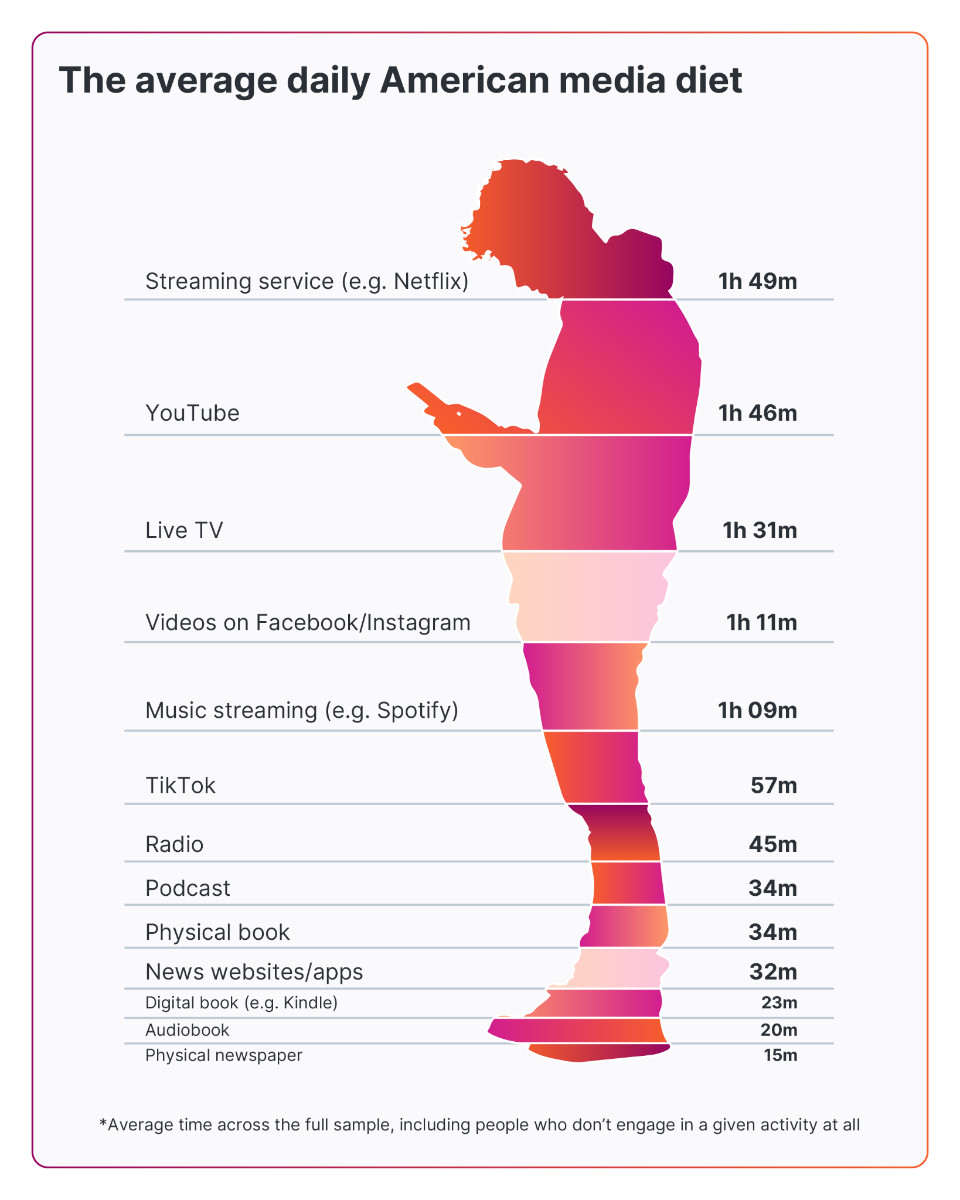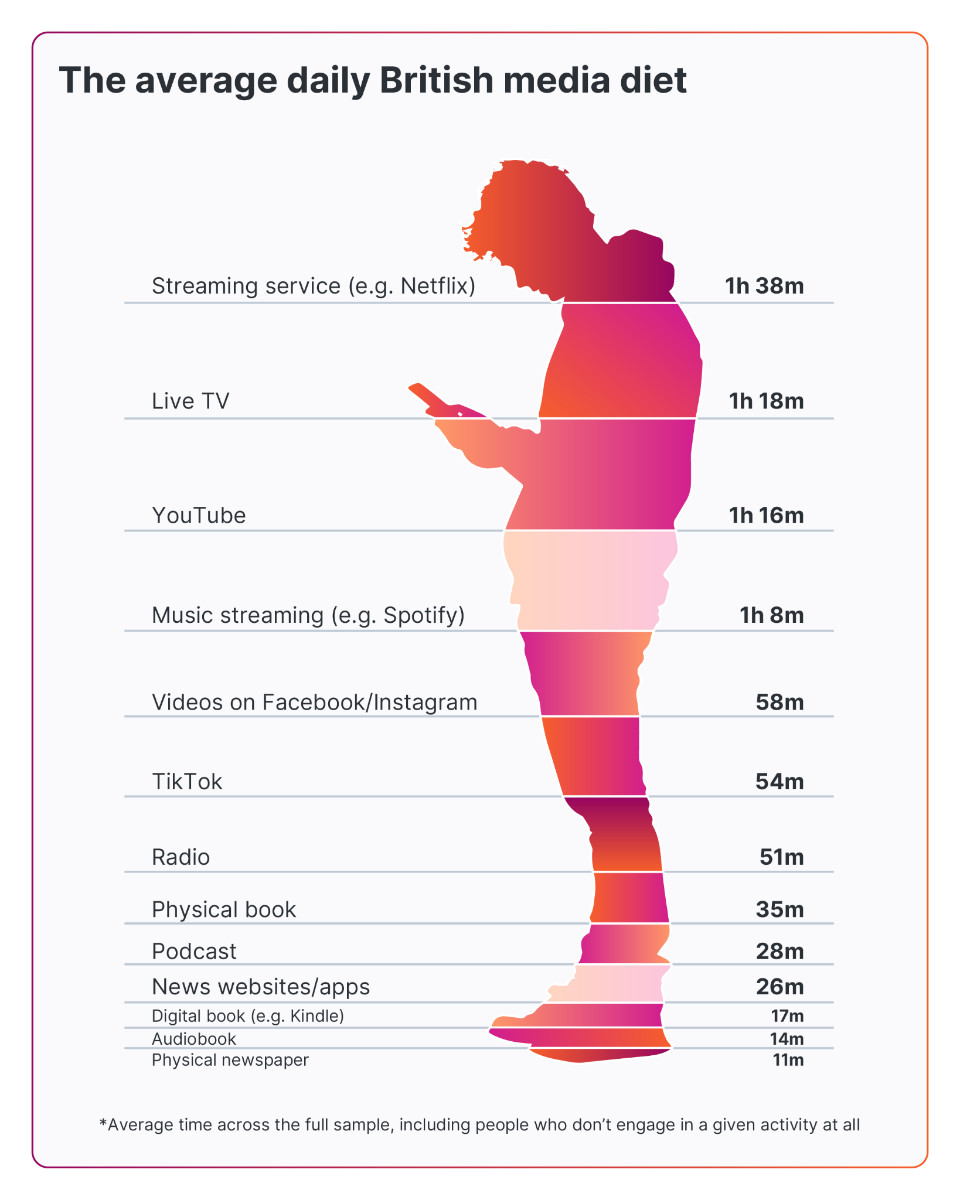
New survey of UK and US adults suggests media plans may be based on outdated assumptions about how consumers watch, scroll and stream
- Only 44% of Americans and 35% of Brits say they watch an ad as intended once they can’t skip it. Most redirect their attention, mute it, or stop watching altogether
- 66% of Americans and 59% of Brits regularly watch YouTube videos over 15 minutes, and even TikTok now holds over a third of its audience for content that length
- YouTube is the platform people feel most “addicted” to in both the US (49%) and UK (39%), beating TikTok by 19 points in the US and 7 points in the UK
- 92% of Americans and 94% of Brits use at least one ad-supported streaming platform, and in the UK, ad-tier adoption on Netflix and Amazon actually peaks among upper-middle earners, not the least well-off
New research from consumer insights platform Attest finds that many of the assumptions underpinning media planning simply don’t reflect how people actually consume content today. Based on nationally representative surveys of 1,000 UK and 1,000 US adults, alongside five years of tracking data in each market, Attest’s 2026 attention economy report finds that some of the safest bets in media buying, on ad avoidance, video length, platform loyalty and premium audiences, don’t hold up to scrutiny in either market.
Non-skippable ads are mostly going unwatched
The logic behind forced-view ad formats is that a captive audience is a guaranteed one. Attest’s data says otherwise. When Americans can’t skip an ad, only 44% say they watch it as intended: 34% redirect their attention elsewhere, 17% mute it, and 3% stop watching altogether, meaning 56% of “forced” ad views aren’t real views. In the UK it’s worse: just 35% watch as intended, while 65% redirect their attention, mute it, or leave. AI ads are especially likely to cause disengagement among Gen Z: a third in both markets dislike them.
Long-form video is growing, not dying
The assumption behind most “short attention span” commentary is that video has been chopped into ever-smaller pieces because that’s all audiences want. The data tells a different story: as creator platforms introduce longer content, it’s gaining eyeballs, not losing them. Two-thirds of Americans (66%) and 59% of Brits regularly watch YouTube videos longer than 15 minutes. Even TikTok now holds 39% of Americans and 34% of Brits for content 60 times longer than the 15-second clips it was built for. All major creator platforms have increased maximum video length in recent years, reflecting growing demand for longer content. Nor are viewers reaching for a bigger screen to watch it: the smartphone remains the dominant device for long-form viewing in both the US (57%) and UK (50%).
YouTube, not TikTok, is the platform people can’t put down
Respondents were asked which platform they felt most “addicted” to using – YouTube tops the list for the platform people feel most “addicted” to, in both the US (49%) and UK (39%) – not TikTok. Facebook is a close second in both markets, and TikTok trails by 19 points in the US, but just 7 in the UK.
Few viewers give TV their full attention
Only around 1 in 8 viewers say they give TV their undivided attention, with no other activity happening alongside it. The majority are second-screening, with scrolling social media the most popular activity (46% in the US and 43% in the UK).
Ad-supported tiers are reaching every income bracket
92% of Americans and 94% of Brits use at least one ad-supported streaming platform. In the UK, ad-tier usage of Netflix and Amazon Prime Video actually peaks among upper-middle earners (£50,000–£99,999), at 53% and 50% respectively, only easing off at the very top of the income scale. Half of £100k+ UK households still use ad-supported YouTube, and the Disney+ ad tier is most popular of all with this group, used by 41% of them.
“The advertising industry is still built on assumptions this data doesn’t support. Non-skippable doesn’t mean watched, especially in the UK, so brands should be measuring completion and recall, not just buying the format and assuming a forced view is a guaranteed one. And don’t write premium households out of ad-supported plans: the wealthiest audiences are often more reachable than average, not less. Brands still buying against the old assumptions are leaving real attention, and real budget, on the table.”
Todd Latham, CEO, Attest
Key findings: UK vs US: the myths, in numbers
| Measure | UK | US |
| Watch a non-skippable ad as intended | 35% | 44% |
| Redirect attention, mute, or stop instead | 65% | 56% |
| Regularly watch YouTube videos 15+ minutes | 59% | 66% |
| Regularly watch long-form video on TikTok | 34% | 39% |
| Regularly watch long-form on Facebook/Instagram | 43% | 53% |
| Platform people feel most “addicted” to | YouTube (39%) | YouTube (49%) |
| …vs TikTok specifically | 32% | 30% |
| Use at least one ad-supported platform | 94% | 92% |
| Use ad-supported Netflix | 45% | 37% |