
Written by Martin Banks
Members of the European Parliament have given the green light to the von der Leyen 2.0 European Commission.
On Wednesday, MEPs voted to approve the new team of commissioners presented by commission president Ursula von der Leyen.
This follows EU elections earlier this year and the conclusion of the commission’s five year term.
The majority of MEPs, some 370, voted in favour but several delegations voted against or abstained including Hungary’s Viktor Orbán’s Patriots for Europe group.
The Spanish candidate for the new commission, Teresa Ribera, who is lined up for the post of “executive vice-president for a clean, just and competitive transition”, proved to be the one nominee who sparked most controversy.
Some MEPs had accused her of avoiding to address demands about her commitment to resign if the Spanish Justice department accuses her of wrongdoing during the management of the recent devastating floods in two Spanish regions which killed scores of people.
Some MEPs from the Greens group, which had voiced opposition to Hungary’s Olivér Várhelyi and Italy’s Raffaele Fitto as members of the new EU executive,also voted against the von der Leyen team despite the commission president’s recent statements in support of cooperation.
To be confirmed, the College of Commissioners, the EU jargon for the new Commission, needed a majority of the votes cast, which, as expected, it easily achieved.
This will be the second von der Leyen Commission. It was approved by 370 votes for, 282 against and 36 abstentions. The new Commission is now expected to finally take office on 1 December, some six months after the EU elections.
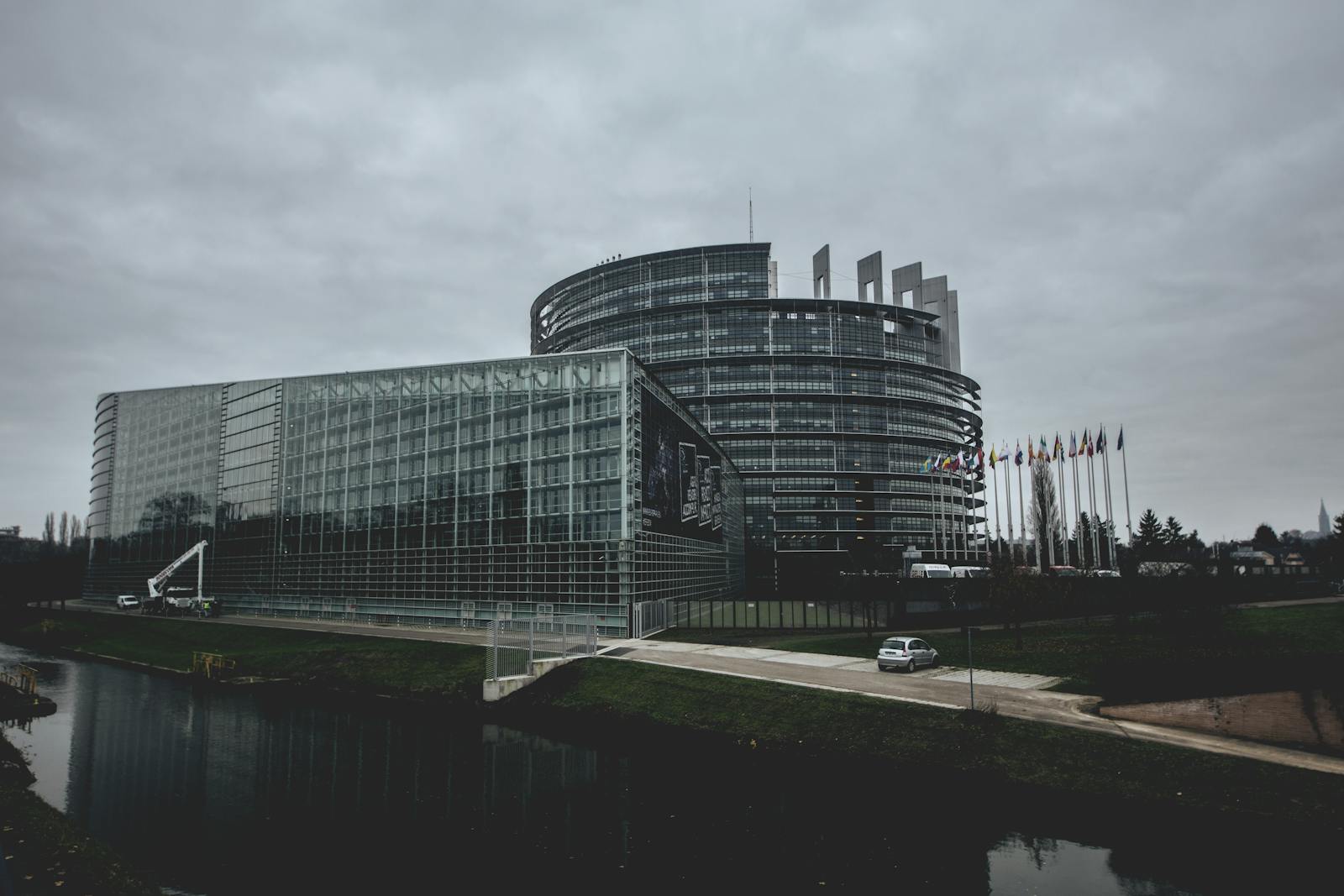
Ahead of the vote on Wednesday in Strasbourg, von der Leyen, a former defence minister in Germany, presented her team and programme.
She confirmed the portfolio changes requested by MEPs in the course of parliament’s evaluation process, telling MEPs, “We are ready to get to work immediately.”
She stressed that her Commission “will always be devoted to fighting for freedom, sovereignty, security and prosperity.”
On the ongoing wars in Ukraine, the Middle East and parts of Africa, von der Leyen admitted that “Europe must play a stronger role in all of these areas”, stressing that it is “needed more than ever”. Strengthening security is crucial, she said, calling on Europe to spend more on defence.
“Europe’s security will always be this Commission’s priority,” she told deputies.
von der Leyen announced that the Commission’s first initiative will be a competitiveness compass, to close Europe’s innovation gap with the US and China, to increase security and independence and to deliver on decarbonisation. On the European Green Deal, she said, “we must and we will stay the course on its goals”.
She committed to presenting a clean industrial deal, launch a strategic dialogue on the future of Europe’s car industry, continue working on a competitive circular economy, and work towards a European savings and investment union.
Her new team was recently assessed by MEPs in sometimes particularly lively public hearings and deputies have now pledged to closely monitor Commission commitments for the next five years.
Reaction to the outcome of the vote was swift with S&D Group leader, Iratxe García, whose group is the second biggest in the EU Parliament, warning that, “Our support is not a blank cheque. We will not accept double-dealing.”
The Spanish member added, “We are at a decisive moment for the future of the European project. We face challenges of enormous magnitude at a time when the extreme right wants to put an end to the European project, Trump threatens to break the transatlantic link, China has shattered trade rules, international law is questioned as a consequence of Putin’s devastating war against Ukraine and Netanyahu’s slaughter in Gaza and Lebanon.”
She added, “With Teresa Ribera’s leadership on the green transition, Roxana Mînzatu’s commitment to quality jobs, Dan Jørgensen’s commitment to access to housing and Glenn Micallef’s engagement for the future of young people, Social Democrats will do their utmost to advance in the EU agenda with a constructive and pro-European approach.”
European Conservatives and Reformists (ECR) co leader Nicola Procaccini said that a centre-left dominance in the EU had “now been broken,” adding, “Defending the national interest does not mean being Eurosceptic or anti-European.Rather, it means loving the original and wonderful idea of a Europe of peoples, united in diversity.”
“We supported the commissioners nominated by the national governments, not sparing them our criticism during the hearings, but respecting the prerogative of the member states to nominate their own commissioner.”
A slim majority of Greens/EFA MEPs supported the new college and its co-leader Terry Reintke noted, “We have long argued that a strong pro-European majority is essential for stable and effective politics over the next five years. These times are incredibly uncertain with economic turbulence, the war in Ukraine, the climate crisis, and Trump’s return. A slim majority of our group has voted for the College of Commissioners to ensure a stable Europe in a time of division. This was a difficult decision for our Group and was not taken lightly.
Her co leader Bas Eickhout, said the group voted by a slim majority to support the Commission “but we remain critical on several elements.”
“We remain opposed to Fitto and Várhelyi in the College. We will also make sure simplification will not lead to deregulation. And we still deplore that it is unclear how this Commission can truly be a Commission of investments.”
Others signalled their strong disapproval of the new College of Commissioners.
The Left Group was particularly scathing, branding the outcome as “a complete farce.”
It added, “Political groups in Parliament have endorsed the most far-right, corporate-driven, and ethically compromised Commission in EU history.
“This is the first EU administration in history that relies on anti-democratic political forces. It’s no accident, but a well-calculated political choice from Socialists, Liberals, and Conservatives to back a Commission that erodes democratic values.
“What is being spun as a ‘democratic majority’ is, in reality, an EPP wish list enforced through a ‘Cordon Flexitaire,’ where conservatives strike deals with the far right when liberals and socialists hesitate.”
“These scandalous deals ensured key posts went to candidates whose records reek of ineptitude and corruption: a Climate Commissioner with offshore dealings and ties to fossil fuels, a Cohesion Commissioner formerly banned from office for bribery, and an Innovation Commissioner accused of selling EU passports to the highest bidder. These appointments were rubber-stamped with barely a pretence of scrutiny. Accountability has been sacrificed on the altar of power-sharing,” the Left statement said.
The statement continued, “Meanwhile, policies that should prioritize good jobs in sustainable industries and social justice are nowhere to be found. Instead, Europe’s Green Deal is being gutted, and industrial competitiveness has taken precedence over bold climate action, cemented by the appointment of Stéphane Séjourné to oversee industrial strategy. This isn’t a green transition—it’s a handout to polluters wrapped in eco-friendly branding.”
However, the business world, represented at EU level by BusinessEurope, welcomed the vote with its president Fredrik Persson stating, “We congratulate von der Leyen and her whole College on their confirmation. The timely approval of the new Commission is good news for Europe. The EU now urgently needs a bold agenda to restore its competitiveness, empower businesses, attract investment and drive innovation.
“Echoing the recommendations of the Draghi and Letta reports, we call on the new European Commission to urgently propose a coherent competitiveness strategy to steer our economic ship back on course. It will be key to reduce the energy cost gap with our major competitors while staying on track for the green transition, reduce the regulatory overburden on European companies, speed up permitting procedures, and diversify our export and import markets.
The European business community stands ready to support the new European Commission and its President in the necessary efforts to make sure that Europe becomes the best place to live, work and do business again.”
The full team listing can be found here: